



From Sicily to the Big Screen: A Sit-Down with Mario Baluci
From teaching at Apple to founding a boutique VFX studio, Mario shares his
"realism-first" roadmap for crafting high-end, human-centric VFX.
The VFX world is often split into two camps: the "fix it in post" crowd and the "let’s build it for real" masters. If you’ve spent any time in the Greyscalegorilla community, you know we have a massive soft spot for the latter. Realism isn't just about pushing pixels; it’s about understanding how light, texture, and physical objects play together in the real world.
Today, we’re shining the spotlight on Mario Baluci, the co-founder of Kosmos. Based in Italy, Mario and his "partner in crime," Luca Auletta, have built a boutique studio that delivers VFX with a refreshing, human touch. From his early days tinkering with his dad’s old engineering computers to teaching at Apple and eventually supervising major film sets, Mario’s journey is a masterclass in staying curious.
We chatted with Mario about the "human" side of visual effects, why he avoids green screens whenever possible, and how he uses tools like Greyscalegorilla and KitBash3D to keep the focus on the art, not just the technical grind.

Realism First with Mario Baluci
My name is Mario Baluci and I’m a VFX supervisor, compositor, motion designer, and 3D generalist from Italy. I’m also the co-founder of the VFX company Kosmos—an adventure I started with my friend and “partner in crime” Luca Auletta, after many years of freelancing.
I began learning computer graphics as a playful hobby when I was very young, thanks to the computers my father—an engineer—used to bring home from his office when they were being replaced. I think I first learned how to use vector-based design software when I was 13, and I immediately fell in love with it, turning that passion into a real career over the years.
When I was 20, I moved from Siracusa (Sicily) to Rome, where I started learning animation using Macromedia Flash, then After Effects, 3D Studio, and Cinema 4D. From designing static images, I gradually moved into more advanced animation techniques, and I worked for five years as a motion designer for the news channel Sky TG24.
Later, I moved to Paris, where I initially worked for about four years as an art director and VFX supervisor at the media agency Reactive Productions. There, I learned a lot about managing large projects—from early sketches on paper, through on-set shooting, post-production, and final delivery.
I then spent three more years in Paris working for Apple as a Creative Trainer, teaching both regular customers and professionals how to use Apple hardware and software. That experience was an extremely important milestone in my life, both professionally and personally, because I learned much more from Apple than just software-related topics.
After that, I decided to move back to Italy and return to freelancing, eventually getting closer to the world of filmmaking. That journey led me to meet Luca Auletta—my current business partner—and after years of collaboration, we founded our own company: Kosmos.
How did Kosmos come about? What sort of work does Kosmos do?
Kosmos started as the story of two guys from the south of Italy (as I mentioned, I’m from Sicily and Luca is from Naples) who wanted to do great things in the world of filmmaking and visual effects.
We met during the post-production of a film where Luca was the VFX supervisor. Before that, we had first connected online through groups we were both part of. When the opportunity came up, Luca invited me to join said project, together with around 12 other digital artists.
He liked the way I worked, and I appreciated the way he managed complex tasks. At some point, I asked him if he wanted to take care of my upcoming projects as a VFX producer. That was a major turning point in both my career and my life, because it allowed me to handle less paperwork and focus more on creative work—while also finding a business partner who became a true friend.
We quickly realized we were very similar, but also highly complementary, and that naturally led to the creation of Kosmos.
Kosmos is a VFX company—or even better, a boutique VFX studio—that approaches every project with deep attention, analysis, involvement, and a very human way of interacting with directors, producers, and every other crew member we collaborate with.
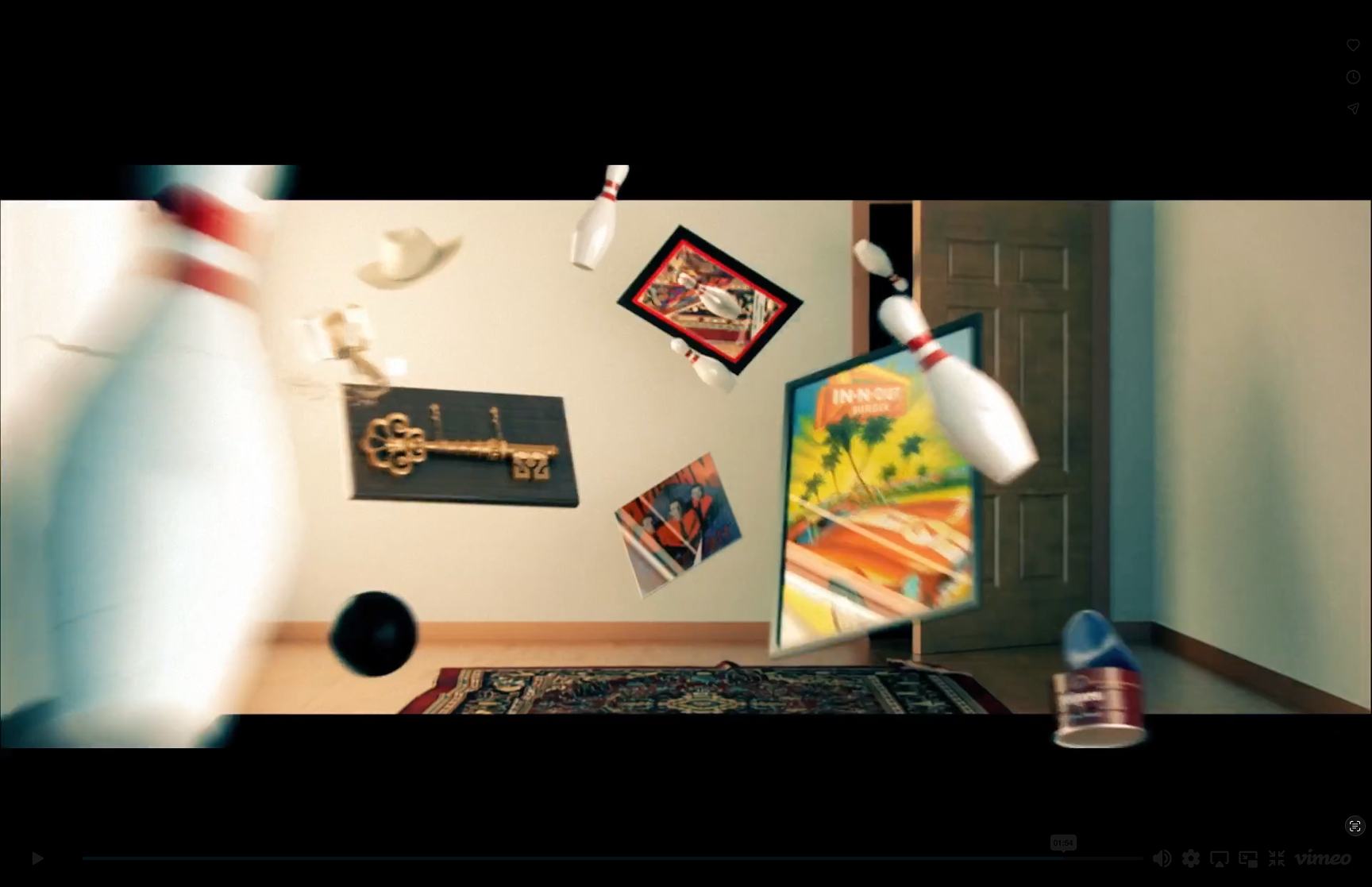
Kosmos’s ability to use VFX to add depth and realism to scenes across genres is truly impressive. Can you walk us through your workflow? How does a piece come together, and how do you know when it’s finished?
We have a very specific approach to projects, and year after year we’ve realized that the productions that keep coming back to us—and recommend us to others—really appreciate this mindset.
We don’t see ourselves as just a post-production company. We see ourselves as an “effects” company, and we always aim to find the best way to make an effect happen—whether it requires practical tools, digital solutions, or a combination of both.
You’ll find very few full-CGI shots in our work and very few green screens on our sets, because we believe that if something needs to look real, it has to be as real as possible during the shooting. That’s a lesson I can proudly say I also learned from Nick Campbell!
“Only what is truly impossible—either because of budget or context—is pushed into the post-production pipeline.”
I can also proudly say we are among the few companies in the world that have developed a proprietary workflow to simulate digital devices live on set: smartphones, tablets, computers, and any diegetic screen. We built a real interactive system designed specifically for filmmaking needs, from the ground up, called CineOS.
When it comes to other types of effects, we also try to avoid stock footage whenever possible. If we can shoot an element ourselves on set in a way that perfectly matches how it will be used in the final composite, we always prefer that.
In short: for us, the result is king—no matter what, and no matter how.
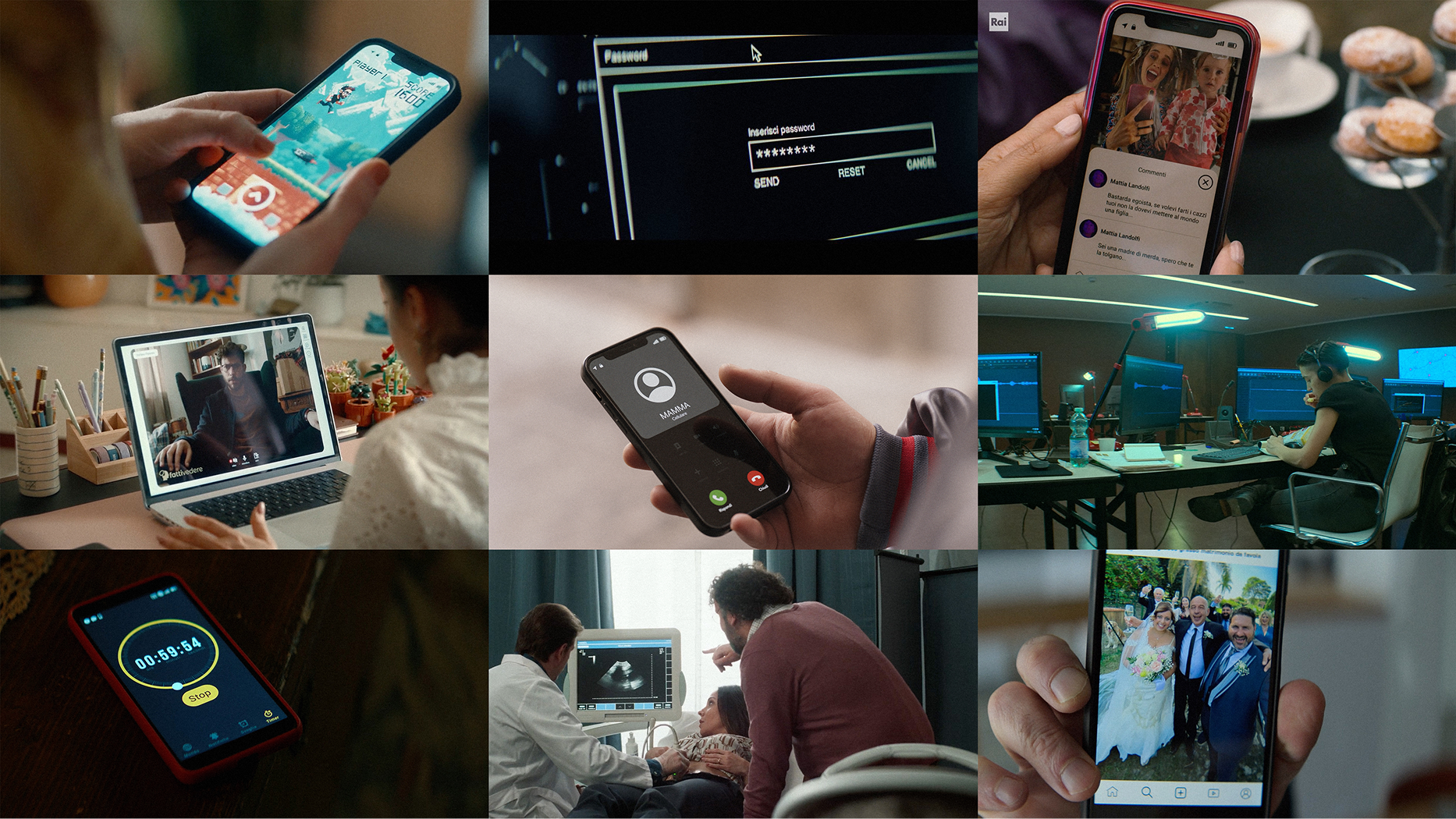
Building VFX scenes for film and TV can be a huge lift. How do you use Greyscalegorilla to speed up workflow?
Greyscalegorilla tools and tutorials have played a huge role in shaping who we are today—and that applies to both me and Luca.
Nick’s lessons, and the work of all the artists under the Greyscalegorilla banner, have been constant companions throughout our growth as 3D artists.
“We love focusing on the art, the meaning, and the message. And having a large set of tools—shaders, geometry, lighting setups, and render presets—helps us achieve our goal: create better renders in less time.”
That’s a slogan I proudly inherited from Greyscalegorilla itself!
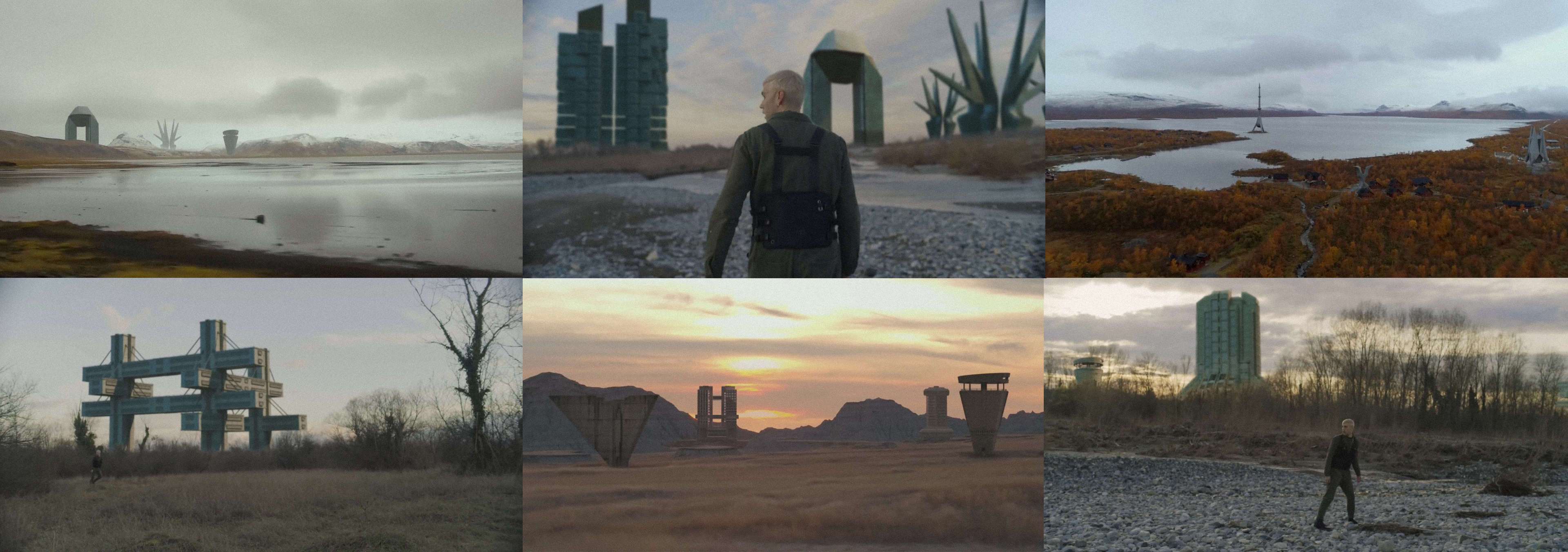
We’ve heard you’re also a fan of our friends at KitBash3D. How have you used their assets in projects?
Just like with Greyscalegorilla, having a strong library of 3D objects with modular, ready-to-use assets is a dream for any 3D artist.
As I mentioned earlier, we try to avoid stock footage whenever it comes to real-world elements. But in 3D, it’s not always necessary—or even smart—to build everything from scratch. What matters is that the models look great.
In that sense, KitBash3D offers an incredibly high-quality set of libraries that allows us to stay focused on the creative side, even under very tight schedules, while still delivering the level of quality we aim for.
For example, I remember a project where we were asked to add brutalist architectural structures into a dystopian music video a couple of years ago. We were honestly a bit lost—but thanks to KitBash3D, we managed to build everything properly and deliver on time.
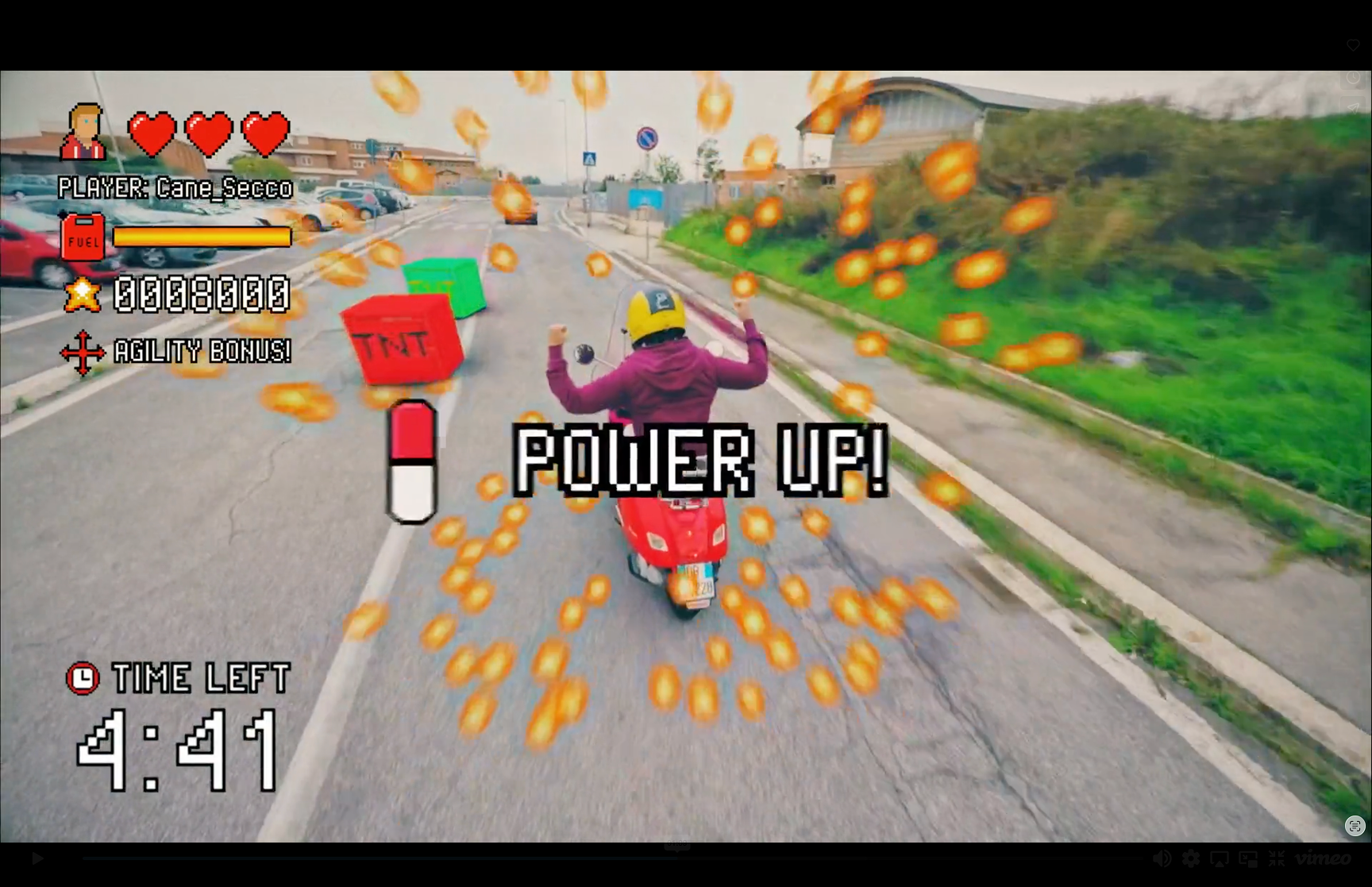
What advice would you give someone looking to start their own studio?
“No man is an island,” if I may quote John Donne.
To everyone working in this amazing industry, my advice is: don’t try to do everything alone. Learn the logic behind how things work, but at the same time focus on what you’re truly passionate about—and partner with other artists to create synergy rather than competition.
In Italy we say, “L’unione fa la forza,” which translates to: “Strength comes from unity.”
What’s next? Any dream projects or goals on your list?
I think I have more than one goal on my bucket list.
To never stop learning and improving, both as a professional and as a human being. To work on increasingly engaging projects and continue expanding our company. To support younger talents with any advice I can offer, based on my experience—my achievements, but also my mistakes.
And finally, to never forget the importance of balance between professional work and private life. That’s something I always try to pass on to our collaborators, and something I want to become a core part of Kosmos culture as the company grows and evolves.
Mario’s approach is a masterclass in balance: using cutting-edge tech to stay invisible. By prioritizing "real-world" solutions over digital shortcuts, Kosmos reminds us that the best visual effects aren't the ones you notice—they’re the ones that make you feel the weight, light, and soul of a scene. Whether he’s simulating live screens with CineOS or building dystopian worlds, Mario is proving that even in a high-tech industry, the most powerful tool in the pipeline is a human connection.
Want to see what they’re building next? Explore the stunning portfolio of Kosmos at kosmosvfx.com