


Motion, Rhythm, and Real-Time Craft: Inside the Process with Jonathan Lindgren
From looping shots to client work with Apple, Jonathan shares how motion, rhythm, and personal projects keep him moving.
Jonathan Lindgren doesn’t sit still. The Stockholm-based designer and animator has built a body of work that’s thoughtful, rhythmic, and surprisingly tactile. From client work with Apple, Google, and Microsoft to personal projects that feel like they could live inside a playable world.
What makes his style so compelling is how casually it all comes together. He’s not chasing trends, he’s building things he wants to see. Whether it’s a woodworking animation that caught Thuma’s eye or an Instagram challenge that turned into a portfolio staple, Jonathan’s work is a lesson in momentum, both creative and literal.
We caught up with him to talk animation, instinct, teaching, and what it means to “ship the work.”

Talking Motion with Jonathan Lindgren
Greyscalegorilla: How did you get into 3D?
Jonathan Lindgren: I initially studied an ancient “Computer Graphics” program at university in Sweden which led me to discover the art of Motion Graphics. The program also featured a lot of 3D, but from a more technical approach for VFX, so I found the simplicity of 2D Motion Graphics and character animation a lot more fun.
During my second year I got really into After Effects and found out about this cool thing called Cinema 4D, as it played along nicely with AE. This was back in 2012–13, so Greyscalegorilla was very much a thing already and I remember doing the Sports Graphics tutorial when it was originally on Vimeo. I was hooked immediately by how fun and easy the process felt like with Nick and Cinema. Felt a lot more intuitive than the complications that Maya gave you.
GSG: Your designs & animations always feel so natural, emotive, tactile and playful. When a new idea comes to mind, do you see the movement first or the design?
JL: Even after doing this for about 12 years, I still get excited at the thought of trying out a new idea. That’s usually how it starts — a specific shot I want to explore or an effect I’m curious about. From there, it’s almost like filling in the blanks, letting the pieces come together, and trusting the process.
Working with animation specifically is a very intuitive process where it’s all about feeling the movements, and you almost have to let the sequence play out based on your own instinct as an animator. I’ve watched a lot of Japanese animation throughout the years so that has shaped my way of thinking when it comes to motion and timings, which will then influence my choices when I’m animating.
So to put it short, it starts out with a simple idea which then evolves through the process of animation, taking a whole different shape eventually!
GSG: A lot of your work has a “playable” quality to it—motion that feels responsive, like it could be part of a game world. Is that intentional?
JL: I’ve never really seen myself as having a specific style, as it’s changed a lot over time. In a way, I’ve always tried to create the kind of work I hope to be hired for one day. So my portfolio is kind of an evolution of the type of projects I want to attract.
If I have any sort of style, it’s probably tied to the way I approach motion. I play drums, so I tend to see animation as rhythm — every action has its own beat and groove. I’ve always felt that people with an interest in music, whether they play an instrument or not, naturally have a strong sense of movement. It’s not just about keyframes and curves; it’s about tempo, spacing, and flow.
GSG: You’ve started teaching animation and design. What inspired that?
JL: Thank you! Naturally it comes from the people that did it first, Andrew Kramer, Nick Campbell, Chris Schmidt etc. I had enjoyed doing small workshops here and there at schools here in Stockholm so I knew I liked it. But it also comes down to a business-aspect. I wanted to see if it was possible to diversify my income beyond doing commissioned work.
When you’re going to teach something, you obviously have to know it yourself. Not just on a surface level but really get deep into it. So when doing courses on animation in Cinema 4D, you naturally learn a lot more about it when you need to explain what each button in the Timeline does. So it goes hand in hand, you learn a lot from it yourself.
GSG: What advice would you give to someone just starting out?
JL: I think this goes back to what I was saying about “manifesting” your own dream client through your portfolio. I’ve been freelancing for almost my entire career, and every time someone asks for advice when going freelance, I say the same thing.
You need to be visible, and the only way of being visible in our profession is to post it online. Don’t have client work that matches the kind of projects you want to do? Make personal work whenever you can and share it — it’s the best way to show what you’re capable of and what you want to create.
We even turned it into an occasional weekly challenge where we post every Thursday under the hashtag #shipthework. The challenge is obviously to try and do good work in a week's time, but also to exercise the idea of letting something go and not obsess too much over details.
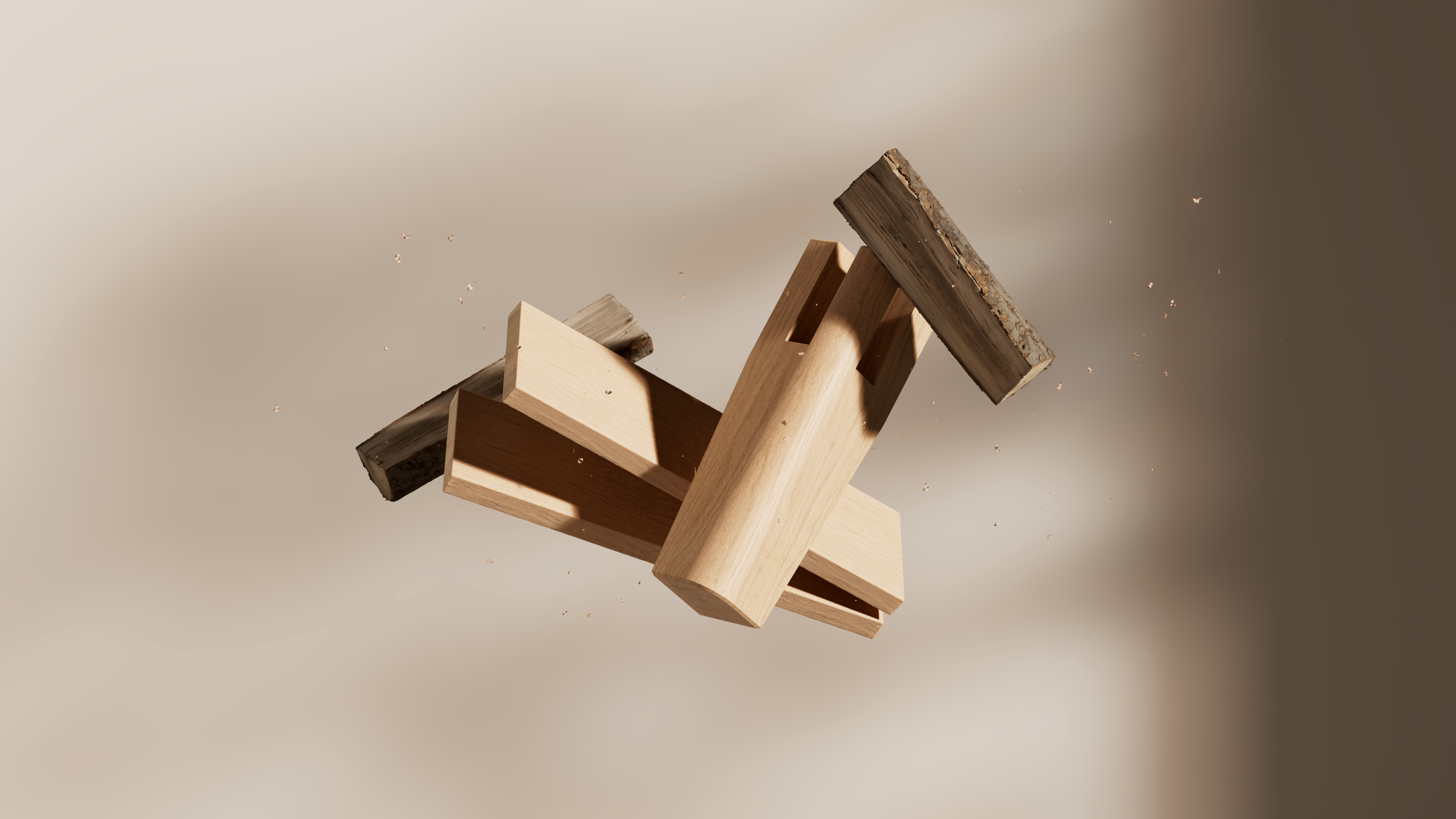
That initiative directly led to a project I did for Thuma, as they saw some of my woodworking-animations and wanted that for their campaign.
GSG: Tell us more about that Thuma project.
JL: Working with brands that value design and aesthetics is always a good start. Thuma being all about design, craftsmanship and minimalism was a dream client to have.
As I just mentioned, it came through them seeing my wood-themed Instagram posts and wanting to do something similar. The brief was to highlight the high-end craftsmanship and joinery details of their products, using these tool-less shots of wood being sawed, routed and worked with.
The piece is loaded with GSG assets — gobos, materials like felt and concrete, and more. The wood for the beds had to be a very specific rubberwood that Thuma uses. We mixed one of the GSG White Oak-materials and some other assets to get the right grain and surface. So even if the exact wood wasn’t in the library, the high-quality assets let us tweak things to make it work.

GSG: How does Greyscalegorilla fit into your daily workflow?
JL: All the time. I want to keep my workflow smooth. The last thing I want is to stop what I'm doing to hunt down a texture pack. Having everything right there in Studio or the GSG library means I can stay in the zone while I’m working. I can’t downplay how important that is for me.
GSG: Favorite GSG tool or material?
JL: Gotta say the wood right? The oak and plywood materials are really good!
GSG: Any upcoming projects or courses you want to plug?
JL: I wish I did, but I have a bit of an easy period right now. Trying to figure out what course to do next... In the meantime, check out learn.jonathanlindgren.com for some decent educational content!
Jonathan’s work lives where design meets instinct: minimal, rhythmic, and never overworked. Whether he’s collaborating with top-tier brands or showing up every Thursday with a new #shipthework post, he’s quietly shaping the future of 3D one animation at a time.
Want to see more? Check out his work and courses at learn.jonathanlindgren.com or follow him on Instagram.