


Mastering Look Dev: How Ranger & Fox Humanizes Tech
At its core, Ranger & Fox is a studio of designers who look at every 3D challenge through the lens of narrative. From their beginnings in broadcast to their current deep-dive into the tech sector, founder Stephen Panicara prioritizes strong design problems over simple category boxing. This philosophy has led them to work closely with giants like Microsoft, where they translate complex technical jargon into visual stories that resonate on a human level.
To maintain this level of craft without getting bogged down in repetitive tasks, the team relies on an integrated workflow featuring Greyscalegorilla and KitBash3D. For 3D Lead Ted Gore and Creative Director Jonathan Larson, these tools provide a moving target of inspiration, enabling fluid experimentation and faster look dev, ensuring that every final render hits the mark.
We sat down with the team at Ranger & Fox to learn more about how they got started, how they move from brief to render, and how they use massive asset libraries to preserve mental bandwidth for big-picture storytelling.
How did Ranger & Fox come about?
Stephen Panicara, Founder and Executive Creative Director: Ranger & Fox was established out of a pretty natural transition. The R&F founders were working together at a studio that was focused on broadcast and entertainment work. Over time, that studio started shifting more into the gaming space, and we realized we still wanted to stay rooted in broadcast and storytelling-driven work. So we stepped away and started Ranger & Fox.
Early on, a lot of it was just relationships, timing, and, honestly, a bit of luck. Through mutual connections, a creative director at Microsoft gave us a shot at a few projects. We put everything into those, he liked what he saw, and that relationship has continued to grow. Since then, we’ve expanded deeper into the tech space, bringing the same storytelling and motion approach, while still keeping a foot in entertainment.
What is the core philosophy that drives the type of work you take on?
Jared Doud, Managing Director: At the end of the day, it comes down to the creative challenge. If something presents an interesting design or storytelling problem, we’re in.
That can come from any kind of client. We don’t really box ourselves into one category. What matters more is the opportunity to make something thoughtful and well-crafted.
The other big piece is the relationship. We like working with good people. We’re very collaborative and try to make clients feel like they’re part of the process, not just handing something off. That builds trust, and it’s a big reason we have a lot of repeat clients. Once there’s a shorthand, the work just gets better.

Can you walk us through your workflow from initial brief to final render?
Stephen & Jared: It always starts with design and narrative.
When a brief comes in, we’re trying to understand the core idea and how that translates visually. That means pulling references, sketching, storyboarding, and iterating early to figure out the right look, tone, and approach. We spend a lot of time here because it sets the foundation for everything.
Once that direction is solid, we move into the previs. That’s where things start to come to life. We test motion, explore how elements behave, and start building out the systems we’ll need. Whether it’s 2D or 3D, this is where we do a lot of the R&D and figure out how the piece actually works.
From there, it moves into production. The goal is to stay true to what we established in the design phase and bring it fully to life.
That can take a few different forms. Sometimes it’s live action, where we’re shooting, editing, and layering motion on top. Sometimes it’s full 3D, building scenes, iterating through renders, and refining to final. Other times it’s 2D, where it’s all about timing, motion tests, and composition.
But across all of it, the throughline is the same. It starts with a strong design idea and evolves into something that works in time, with motion doing as much of the storytelling as the visuals themselves.
Let’s meet the creative team! How did you first get into 3D?
Jonathan Larson, Creative Director: I was one of those guys in high school who knew exactly what I wanted to do with my life. No question. I loved 3D and visual effects from watching a lot of movies. I remember my first experience with 3D was in high school, where I took an independent study my senior year. I got access to a 3D application, and I just started modeling things. I even wrote my college essay about that whole experience and tried to get into a major that was 3D and design-focused. I ended up going to RIT for new media design. It was half focused on 3D and motion graphics and half focused on web development with ActionScript at its focus. And that combination is why all the work we do on UI for Microsoft feels so familiar.
I also remember we used Cinema 4D, but I also took classes experimenting with Maya and other software, but C4D was the easiest.
I've always really loved what 3D can do, how you can enhance films, how you can just expand reality, and what's possible to enhance the story you're telling. The movie that always stuck with me was Stranger than Fiction because of its very heavy motion graphic approach. It has that augmented reality feel where you're putting information on top of footage in 3D space.
I can’t believe it's been over 20 years since I first touched 3D. I’ve gone through a full progression, first learning the software, then using it heavily every day, and eventually transitioning into directing 3D work and becoming less hands-on. But I miss getting my hands dirty and working in 3D, and so I'm pushing myself to do more with the software again. Part of getting back into it that’s made it super easy are the tools like KitBash3D, because you don't have to start from scratch. The library gives you a starting point so you can get to a high-quality product quicker. For example, if I need to make a scene with a table, I go onto KitBash3D, through all their libraries, grab a bunch of assets, put them together, and then I can focus on what I want to tell. Like, OK, how do I want to set the mood? How do I get the lighting and texturing right? I can get into the deeper problems and really get something high-quality much quicker than just starting from scratch.
Ted Gore, 3D Lead: I actually majored in Chemical Engineering at Georgia Tech. MotionGraphics was not on my radar at all at the time. Towards the end of my senior year, a roommate of mine wanted to enter a short film competition being held at our school. Long story short, I helped out, found motion graphics along the way, and it eventually became my career. I got into doing 3D because, at the time, and basically still to this day, Cinema 4D was the standard for doing 3D motion graphics, so I picked it up and slowly started learning it on my own. I really gravitated towards the more technical aspect of 3D work due to my engineering background. This is now over 20 years ago, and it’s been a long road learning all of the different tools and disciplines available to you in the program. I used it as more of a side tool early on, but more recently, in the past 6-7 years, I’ve shifted my focus to leaning heavily into almost primarily using 3D, and really spending my time trying to fully master it. There’s always something new to learn, however, so it’s been somewhat of a moving target.
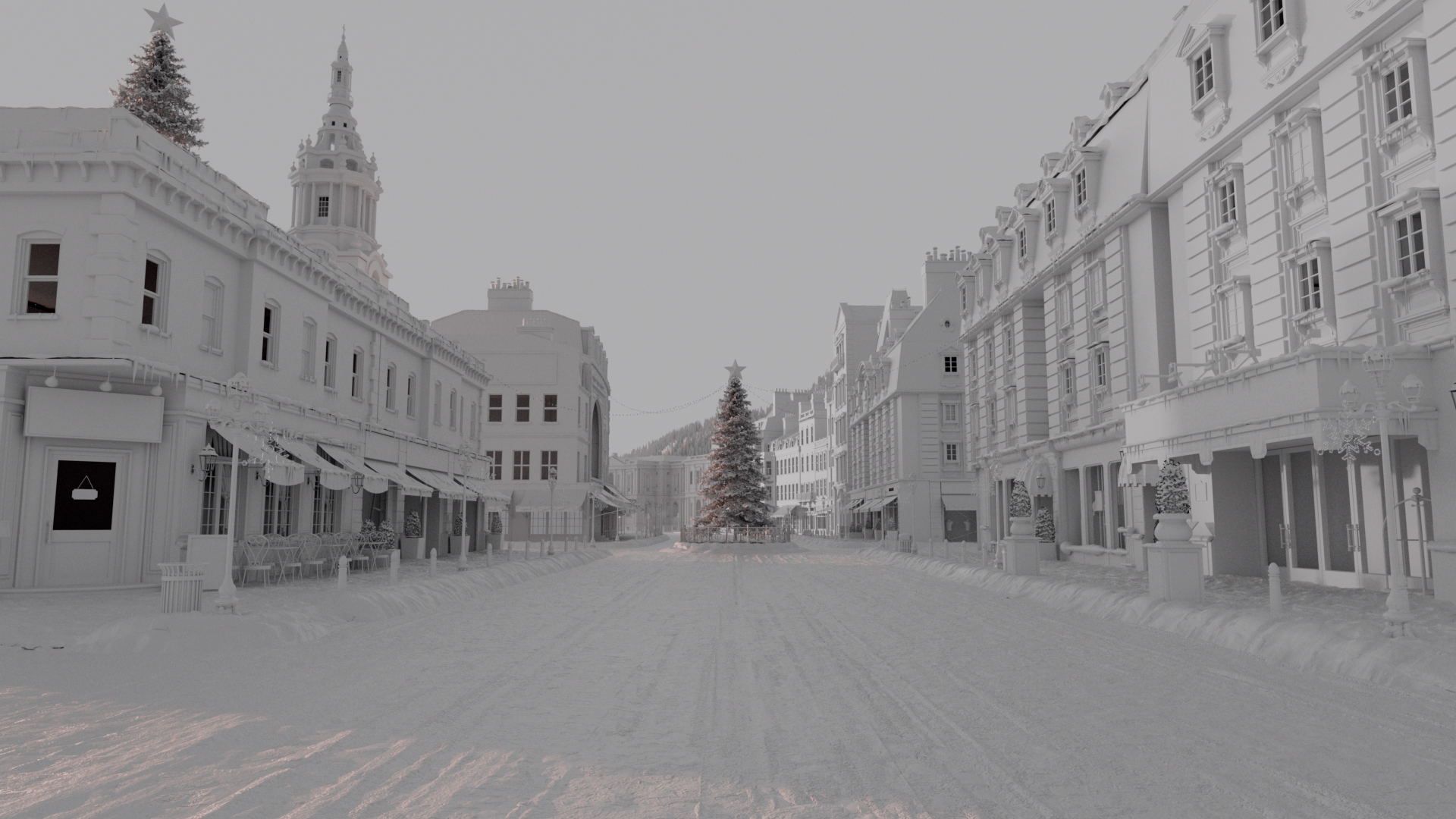
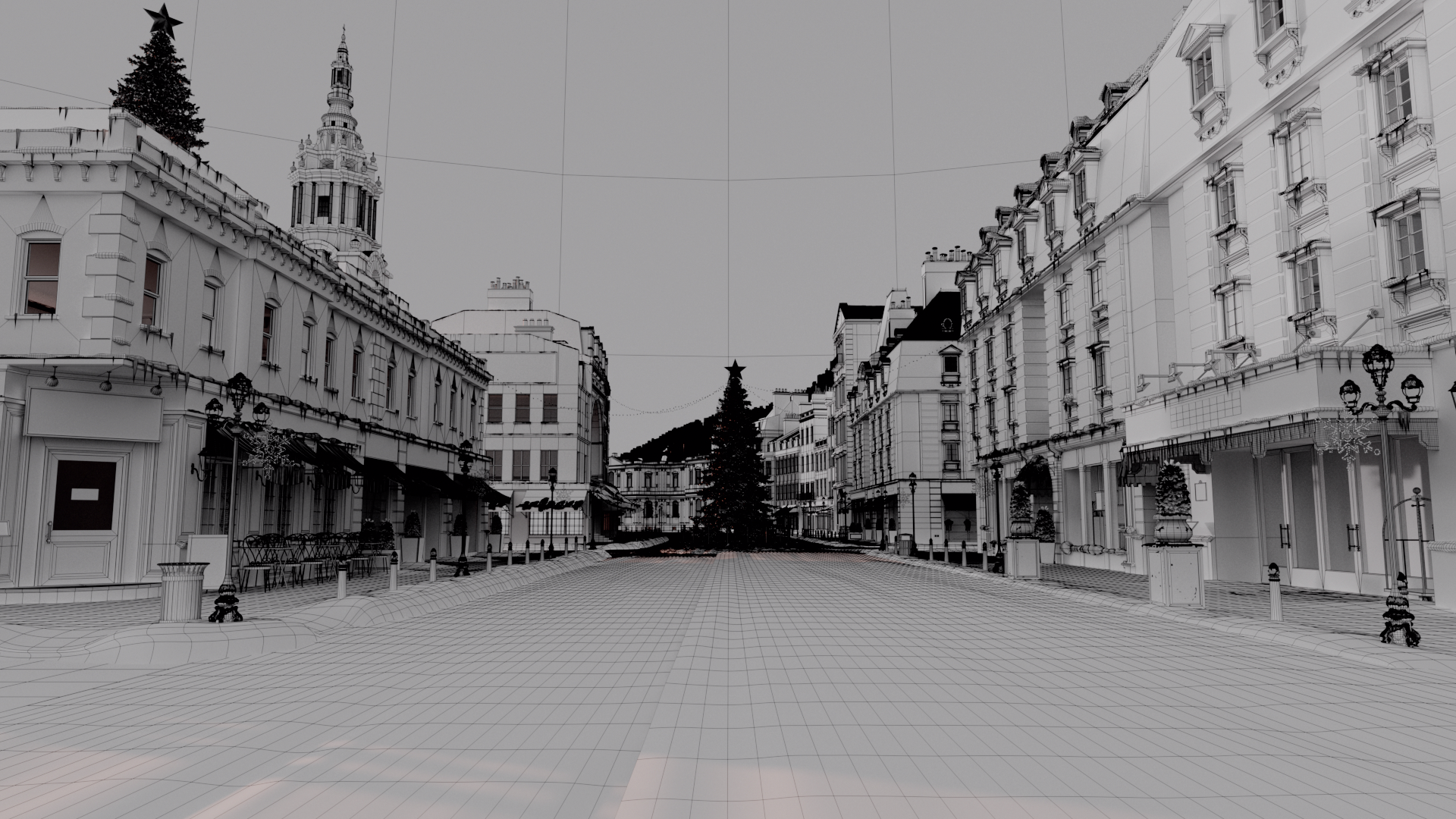


Ranger & Fox has built a reputation for humanizing tech through design.
How do you approach complex technical concepts to make them feel approachable and organic for the viewer?
Jonathan: A lot of humanizing is being able to understand and tell the story of our clients. It all starts with our clients describing technology they’re super familiar with. They are so familiar that they don’t even realize they’re almost speaking a second language. We’re one step removed, learning about a lot of this for the first time. It gives us the ability to come in with fresh eyes and say, “We don’t know what this is, let’s figure it out, and how do we tell that story?”
In practice, we do this by first creating a story layout based on what we understand. We put things together in a sequence through script or boards and timing it out. We then share this with the client to identify any gaps we may have missed, so we can clarify and communicate them more effectively.
We’re able to work closely with these companies to bridge the gap between their expertise and our outside perspective. Because we must simplify it for ourselves to fully understand it, we can then humanize it for others. Once we fully understand it ourselves, we can explain it to everyone else. That ongoing communication with the client helps simplify what’s going on, shape the story, and ultimately figure out how to tell it in a way that feels clear and human.
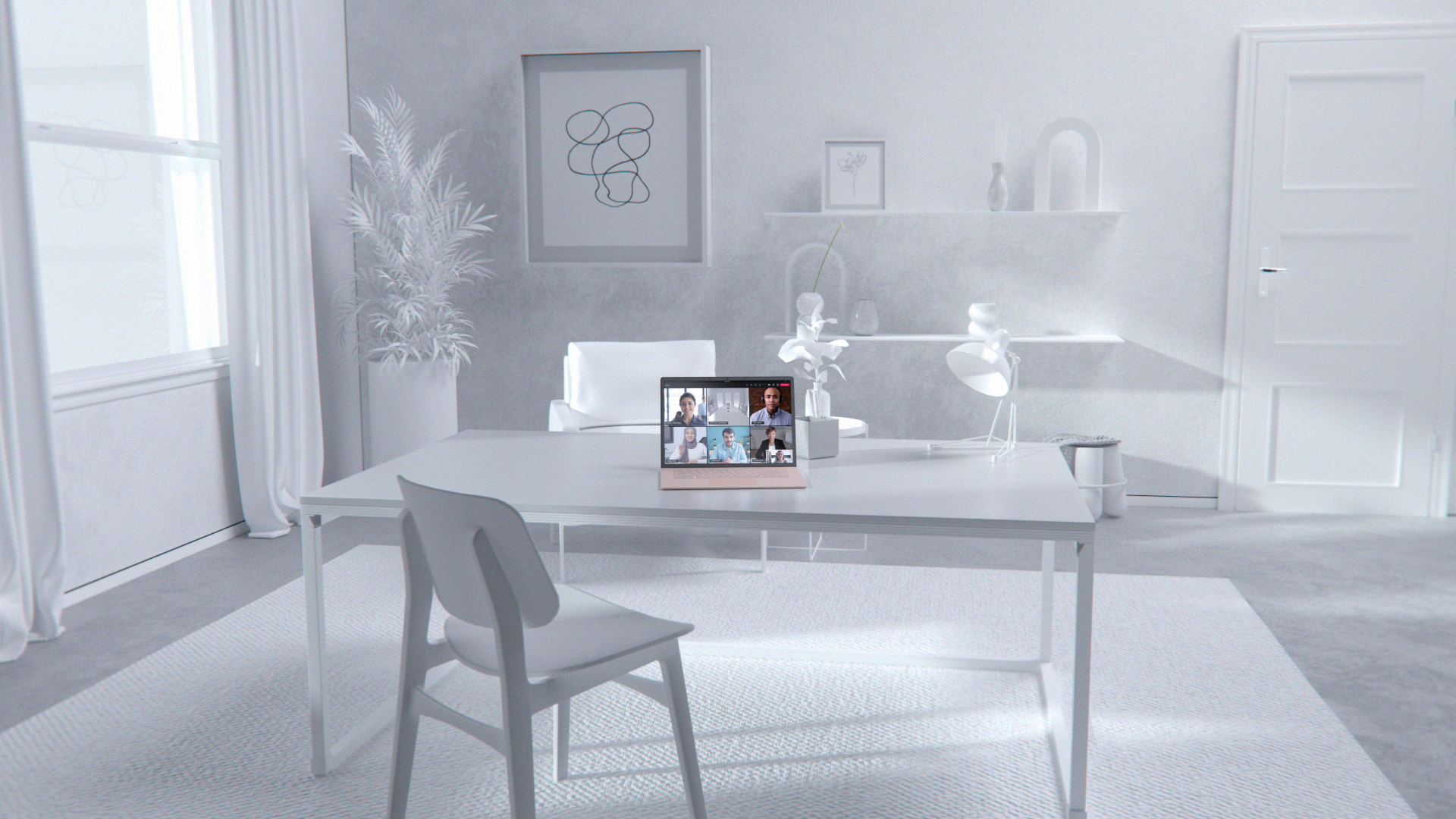

Building detailed, tech-heavy environments can be a massive lift. How do you use KitBash3D and Greyscalegorilla to speed up your workflow?
Jonathan: Building detailed tech environments can be a massive lift. With 3D, it’s such a complex beast that you can easily get narrowly focused on one small detail for way too long. KitBash and Greyscalegorilla do a great job of providing high-quality assets. You start working faster and creating more quickly, and it also saves a lot of mental space and decision-making fatigue that can happen. You stay focused on the bigger picture and the larger story, really communicate that first, and then, once you’re mostly there, start fine-tuning anything you need to.
KitBash3D and Gryescalegorilla really help you get to that bigger-picture stage where you have the mental bandwidth and don’t have to make all those tiny decisions upfront.
For example, you can bring in a lighting Kit from Greyscalegorilla, and it’s already going to make things look good. Once your KitBash3D assets are in, you can shape the lighting to feel a certain way by moving lights around or adding a spotlight exactly where you want it. For example, if you need a brick background, you bring in the brick texture, apply it, and use it as is for the whole project, and then toward the end of the project, you can say, “Now that I’m here, let me fine-tune.” Maybe the bricks aren’t quite the right red, so you tweak things to really bring everything together.
Ted: Greyscalegorilla was one of the first to introduce a library that is so easily accessible and integrated with C4D. They launched their Studio app, where all of their assets are available to easily browse and, with a click of a button, bring straight into Cinema 4D. Then KitBash came along and did something similar with Cargo.
That was a huge game-changer for 3D work because, before that, so much time was spent searching the internet for assets. You’d go to different 3D websites for models, download them, and the geometry would be lacking, or the textures wouldn’t work properly. Then you’d be on another site looking for textures, downloading everything individually, loading them in—it just took so much time.
With these libraries, you can go in, find exactly what you need, and drop it straight into Cinema. It made the process so much faster and the 3D creative process a lot more fluid and fun—especially during look dev—because it’s easy to quickly swap things out and experiment.

What advice would you give to an aspiring artist looking to get into 3D today?
Jonathan: Try to have a reference, a really clear idea where you wanna go, a general picture of what you want, so that you are minimizing the amount of guesswork you're doing. Don’t get too bogged down in any details too early on in the process because it's so easy to do and lose hours on things that won’t be as important. Get the big broad strokes in there first and then detail out what's important.
Ted: One of the biggest things that's helped me along the way is finding other artists whose work you like, reverse engineering what they did, and then doing it yourself. There is so much learning that can happen through that process. The goal isn’t to copy someone's work and claim it as your own, but rather to use it as a learning experience. I've also found that many times, while in the process of doing this, your own creative ideas start to influence what you’re doing, and it starts to take its own shape. A lot of the time, becoming something completely different and unique to your own self-expression and creativity.
What’s next for Ranger & Fox?
Stephen & Jared: As a studio, we really like the space we’re in right now. Tech and entertainment both offer a lot of range creatively, and we’re excited to keep pushing deeper into those worlds across different types of projects and brands.
We’ve always positioned ourselves in that overlap between storytelling and design, and there’s still a lot of room to explore there. Whether it’s more cinematic brand work, longer-form content, or new ways of blending live action with motion, we’re interested in continuing to evolve what that looks like.
At the same time, we’re paying close attention to how AI is shaping the industry. As an artist-run studio, we see it as a tool to build smarter workflows and remove some of the more repetitive parts of production. The goal isn’t to replace the creative, it’s to create space for it. If we can use technology to free our team up to focus more on the design, storytelling, and craft they love working on, that’s a win.
We’ve always had a mindset of curiosity and high standards, and that’s not changing. The tools will evolve, but the goal stays the same. Make thoughtful, well-crafted work with people we enjoy collaborating with. But at the core, we’re designers. That’s really the lens we look at everything through. If it’s a strong design problem, we’re interested.
Ted: I can’t say I have a dream project. I’m always down for a good 3D challenge or a unique kind of solve. I just love getting into 3D and figuring stuff out. Anything where I can dive into all the awesome tools available to us now.
I would say that doing something for the Sphere sounds really cool because it’s such a different format. We’re so used to putting things on a flat screen; to make something that is immersive, surrounding your peripheral vision and figuring out how to work that out in 3D is exciting. It’s not just about working with 3D objects in a 3D app; it’s also about figuring out how all of that gets projected into what is essentially a 3D space.
Jonathan: I would love to do TV show titles, film titles, and more stuff for film and TV, and documentaries. I would love to work with Brandon Sanderson on something or with the new Firefly animated series.
The evolution of Ranger & Fox highlights a vital lesson: the tools will always evolve, but the goal of making thoughtful work stays the same. By integrating Greyscalegorilla’s materials and lighting tools with modular architectural Kits from KitBash3D, Ranger & Fox has mastered a workflow that prioritizes the big, broad strokes before detailing what truly matters. As they look toward a future of immersive 3D experiences, they remain a premier example of how to balance high-end production with a human touch.