

Interview: A Skater Turned Designer for Nike, Vans, Marvel and More
How two surgeries sidelined this skateboarder and turned him into a top motion designer with his own creative powerhouse.
This is the story of Already Been Chewed and Barton Damer.
All great artists evolve. It comes with the territory. In this industry in particular, motion designers will constantly face pressure, second-guess their abilities, and continue to push themselves harder. That’s what it takes to make it in this industry, or really how to succeed in any type of creative position.
In this interview, you’ll certainly hear about many familiar stages of creative growth. Discovering your talent, honing your skills, facing your fears, getting lucky, taking risks, failing, and evolving. These struggles are not unique to Barton Damer, but his personal experiences are.
Barton Damer is the Founder and Creative Director of Already Been Chewed, or as many may know it as ABC. In our chance encounter, Barton and I learned that we live and work in the same area, a coincidence you’ll find repeating itself in this story. It’s funny how the internet has brought everyone together, but we tend to forget that many of us are just down the road from each other as well. That’s what led to me visiting Barton and his team at Already Been Chewed.
Here’s a glimpse at some of ABC’s most recent work.
I wanted to find out much more about ABC and Barton, and they were gracious enough to host me. Not only did I learn about his personal experiences, but we talked about motion design, rendering, tech, and growing your own business online. Here’s what I learned.
How it all began: the ABC’s of ABC
Michael Maher: Can you tell me a bit about yourself, and how you ended up here in Texas?
Barton Damer: I am originally from the Washington DC area, moved to the Dallas area about 11 years ago. I moved here for a job. For about three years I worked there during the day, and I started freelancing as a motion designer nights and weekends.
Those days were tough. I’ve got a wife and three kids, so I would get home from the day job, hangout with them and get the kids to bed around 7:30. Then I would jump back on the computer and do the stuff I was really passionate about. I’d work till about 2 AM, go to bed, then get up for my 8 AM job. It was three whole years of doing that.
MM: That’s dedication. Had you always intended on becoming a motion designer?
BD: My background is actually in print design. I graduated college in 1998, and I was a graphic designer for 7 years before I even knew what motion graphics were. I was very bored with graphic design, and was looking into different careers. That was when I saw my first Shilo reel. I was immediately hooked, and it breathed new life into my design career.
MM: Tell me about those early days learning about motion design.
BD: I actually ended up learning animation through skateboarding. In fact, my whole career comes back to skateboarding.
When I was 18 and freshmen and college, I blew out my ACL and tore my meniscus. My life at the time was either playing basketball or skateboarding. With that injury, I couldn’t do either of those things.
I was three weeks into my freshmen semester, and I didn’t know anybody except my high school sweetheart, who would later become my wife. While she was helping me limp around campus, I was studying to be a Public Relations major. Every PR major had to take an intro to drawing class, and since I was waiting to have surgery during Christmas break, I spent all my free time in my bedroom drawing for that class.
Up until that point, I didn’t really know I could draw. I knew I could paint photo-realistically, but I had never really drawn anything outside of Tony Hawk skulls and graffiti tags. I ended up switching my major to commercial art. That’s where I learned how to oil paint, acrylics, and all that stuff.
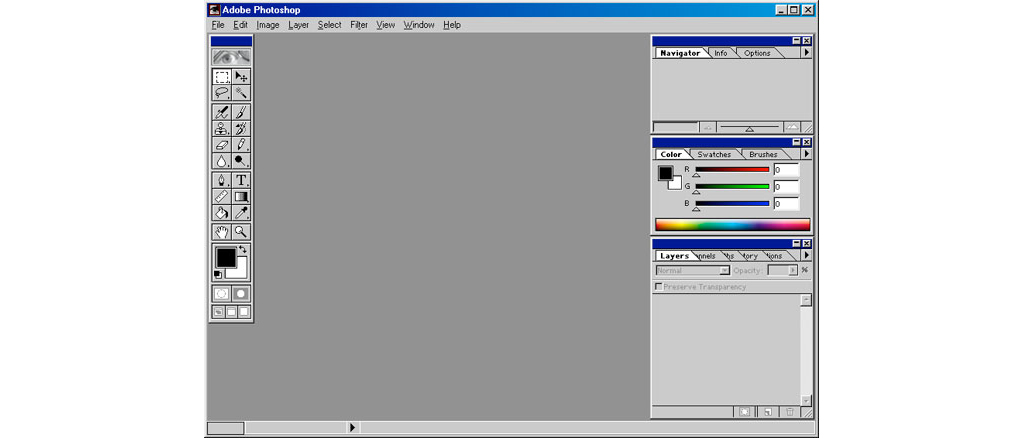
I also had some computer classes, but remember, this was 1998. I had an early version Photoshop.
Fast forward to when I was 27, I was skateboarding and I blew out my other ACL and meniscus. I wanted to keep hanging out with my friends, so I started filming and editing skate videos. I found out very quickly that I didn’t enjoy sifting through footage, but I did enjoy making the titles for the videos.
I guess that was my initial introduction to motion graphics. I was working in iMovie, sliding layered JPEGs and PNGs to create different transitions. While I was working in iMovie, I was researching better ways to animate. That’s when I found out about After Effects.
I was looking for a job at the time, and I saw one that required a knowledge of After Effects. So I went out and bought a laptop and After Effects, learned it during the interview process so I could get the job. After I landed that job, I was so scared of losing it. I was so scared that I continued to learn. [laughs]
MM: Oh man, that hits too close to home. That has to be common among most creative jobs, I feel like we are all just trying to do the best we can as fast as we can, especially when we don’t know how.
BD: For sure. So I got the job and pretty quickly, people thought I was pretty good at motion graphics. It wasn’t because I was good with After Effects. It was because I had eight or nine years of designing as a professional, plus the four years of school before that. So I spent all my time making sure that things looked good. The animation was just secondary to that. I started noticing that my work was flat, and it needed some dimension to it.
This was around the time I started seeing work by Shilo. When I started trying to get my work to look like theirs, I looked into 3ds Max, I looked into Maya, but as a graphic designer Cinema 4D seemed to be an easier transition. The other programs made it seem like I was completely changing my career path to be an animator for Pixar or something, and I didn’t really want that. I still wanted to do design, and I was excited about how 3D could enhance my designs.
So I chose Cinema 4D and loved the fact that I could use Photoshop files as textures. I did my very first C4D project for a magazine, where I did a 3D type illustration around the word collide. I just extruded 3D type and made the word collide come to life, like it was colliding. Used displacement on a sphere with metal texture, and it looked like I created this auto crash.

That piece went viral. Twitter was still relatively new, and everyone was retweeting it. I even got requests to make tutorials. [Author’s Note: You can read that very tutorial on Go Media.] The piece was featured in Computer Arts and Advanced Photoshop.
After that, I worked on a tour poster for the band Wolfmother. That was another piece that was huge.

I ended up winning Digital Artist of the Year in Computer Arts magazine for that poster. That was crazy. Not only was I in the magazine, but my work was featured in a gallery in London, and I was still working full-time. It was a bizarre thing, where I go to my day job and no cares about what I do. But then on nights and weekends, people started taking note of my work and I won an award.
MM: Bizarre indeed. So Collide was one of your first C4D projects ever?
BD: Yeah. In fact, Paul Babb, the CEO of Maxon, contacted me after seeing the piece. I immediately thought I was in trouble. I thought maybe I didn’t have the right license or something, and I was really freaked out. He told me that he saw the piece and it was “absolutely stunning” and asked if I had any interest in showing off my work at speaking engagements.
At the time, I didn’t have any other work! That was the first thing I had ever done. So that was huge for me. It freaked me out and motivated me, and I knew that I had to learn this. This must have been 2009. That’s back when Nick [Campbell] was doing reel critiques. I, of course, was learning everything about C4D from Nick. I didn’t know how to do anything. He critiqued my reel, and I was petrified. He loved it, and it was a huge relief. I was like, this is great. I can do this.
Building Already Been Chewed
MM: Was this when you decided to become a motion designer full time?
BD: Not quite. I just started to become more picky about the type of freelance work I was doing. Rather than seeing if I could fill a freelance schedule, I was filling it with stuff I loved. I was freelancing with skateboard brands, shoe companies, and all kinds of stuff.
Soon after, it finally made sense to go freelance, since I was almost making as much as my salary, just working nights and weekends.
I will say this though. So many times in this industry, kids are two years out of college and think they need to launch their own studio. You want to pace yourself. The biggest thing that I hear is that they want to be Art Directors by the time they’re 25 years old. Are you going to want to change jobs when you’re 30? Because after Art Director or Creative Director, there is no where else to go.

MM: That’s great advice. Something it also took me years to come to terms with myself. So, you’re now jumping into a freelance career. Did you have anything lined up?
BD: Nope. Up to that point, I hadn’t been using contracts or anything like that. When I made the move, and left a job that I really loved, I had no work lined up. That was a Friday. That Saturday I went to a skateboard competition where I met a Creative Director of an agency that was working with Scion, who was the main sponsor of the event. By Monday, I started doing work for Scion.
That is a really rare example. Outside of that job, most of my early gigs were internet based.
MM: Right place at the right time. Sometimes that’s all it takes. What were the early struggles of starting your own business?
BD: Oh man, I got to a point really quickly where I realized my days were spent just doing emails and phone calls. I started feeling guilty because this felt like an experiment. Each night, I would talk to my wife and tell her that I had been working all day long, but I had done no billable hours yet. So I’d still have to work nights up until 3 AM just to get 8 billable hours. I realized nothing was changing. I was still working all night, even though I had more free time.
I never liked the idea of being a freelancer. With my history in design, I knew I could launch a brand from scratch. I could design the logo, the business cards, catalogs, fully 3D animated TV spots, branded shows, graphic packages. I wanted to keep working directly with an agency or a client.

It always bothered me when people wanted to know my day rate or hourly, because I could do anything an agency could do. So I hired a friend of mine to come on board. He had just graduated with a Marketing degree and we worked out a deal. He couldn’t find a job without having experience, and you can’t get experience unless you have a job. I told him to come work with me, and worst case you are always on the phone working with the agencies I’m working with. You can always get a job there, and then you could get me more work. [laughs]
MM: So now you have a staff. What changes did you have to make to increase revenue so you could afford help?
BD: The moment he came on board I just started tripling my rates, because now I was a studio. We were able to do that for a while, and did it all out of a spare bedroom in my house.

Work just kept coming in, and I trained him to be my project manager. I would be involved up front with all of the projects, like developing a look or a test animation. Then we started outsourcing to freelancers and growing the business that way. We didn’t want to say “no” to work. I was becoming a hands-on Creative Director. Once we got approval on the look or animation style, then we were just outsourcing. We’d get freelancers to finish projects so I could start on the next one.
We did that for about a year and a half, and then decided to move out of the house and into our first space.
MM: That’s another major milestone, which comes with a lot of new challenges. Tell me about that process.
BD: Moving out of the house is probably the biggest leap to make. You’re essentially doubling your expenses. I had a mortgage and a lease. Two electric bills, two internet bills, two air conditioning bills, you know. It’s a big step. I had to do some soul searching.
Do I want to make this a company, or remain a freelancer? There is a lot at stake when moving out of the house. Once you go that direction, you don’t really want to turn back. I definitely felt like ABC needed to be bigger than myself.

It was still the two of us, plus some freelancers. I had been looking to bring on one more person full-time. We had the opportunity to land a large client, and we were competing with two agencies. We landed the client, brought on a third person, and continued to outsource projects.
We were now doing motion graphics, two separate catalogs, TV commercials, trade-show booths, animations, graphics, things like that for this one new client. We didn’t want to be consumed by them, so we continued to fulfill that contract while still saying yes to other things. I just knew it was not healthy to have one client make up so much of your revenue.
We were still small, and we were slammed, all while some big brands started to hit us up.
MM: That’s another fascinating part of this whole story. You continue to work with massive brands. Are they just finding you online?
BD: Yeah. It proves the state of the industry. We’re in a small town outside of Dallas, yet we work with Nike, Under Armour, Adidas, Vans, Lucasfilm, Marvel, and more. I hope that’s inspiring to people. We aren’t in a major downtown, and we don’t need to be.
We have landed some clients locally. We met the Dude Perfect guys through friends at a skatepark.
We have landed more Dallas clients recently, but bizarrely they are hearing about us through the internet. One client in Dallas found out about us through their UK office, who were fans of our work. The UK office said they needed to work with ABC, but even they had no idea we were in the Dallas area. It just happened to work out that way.
MM: There’s this belief that you have to be in a major city near all the agencies. While that may be true for some creative jobs, it’s not the same for motion design. Is that something you’ve noticed?
BD: For sure. The nice thing is, we don’t have the overhead that New York and LA have to deal with. Plus clients don’t ever come into the office. 3D doesn’t work that way. No client is going to come in here and watch us render for six hours to see their update.
I opened up here because we were already planted in Texas. When I first went out on my own, I had offers to setup space within some agencies, but I couldn’t be back in a corporate environment. If I see any carpet or cubicles, I’m going to lose it. Getting the right space was really important to me.

I also didn’t want to be on the road commuting all of the time. If I have to be on the road for 45 minutes of traffic, that’s two full billable hours a day that I lose.
MM: So here we are now in your current office. Tell me about the challenge of finding the right people to join the team.
BD: Everyone here is between 30 and 42 years old. So many people in this industry are burnt out by the time they’re 30, because they jump on board and pull all-nighters for the first 5 to 7 years of their career, and then they’re over it. So, we looked for really talented people ready for a change. Right now we don’t have any junior level staff in-house, and we continue to work with freelancers as well.

It’s also very important that our core team is right here. As artists, this environment is very important to me. We are learning at rapid speed, because we are all talking about work. As fun as a slack channel is, just asking “Hey does anyone know how to do this?” in the room is incredibly beneficial.
You know, if I do something this way, it’ll take me six hours, but someone could just say, Don’t do it this way, do it that way. The speed at which we are learning is magnified. Even when I’m not on the box all day, I’m still learning because we’re always talking.
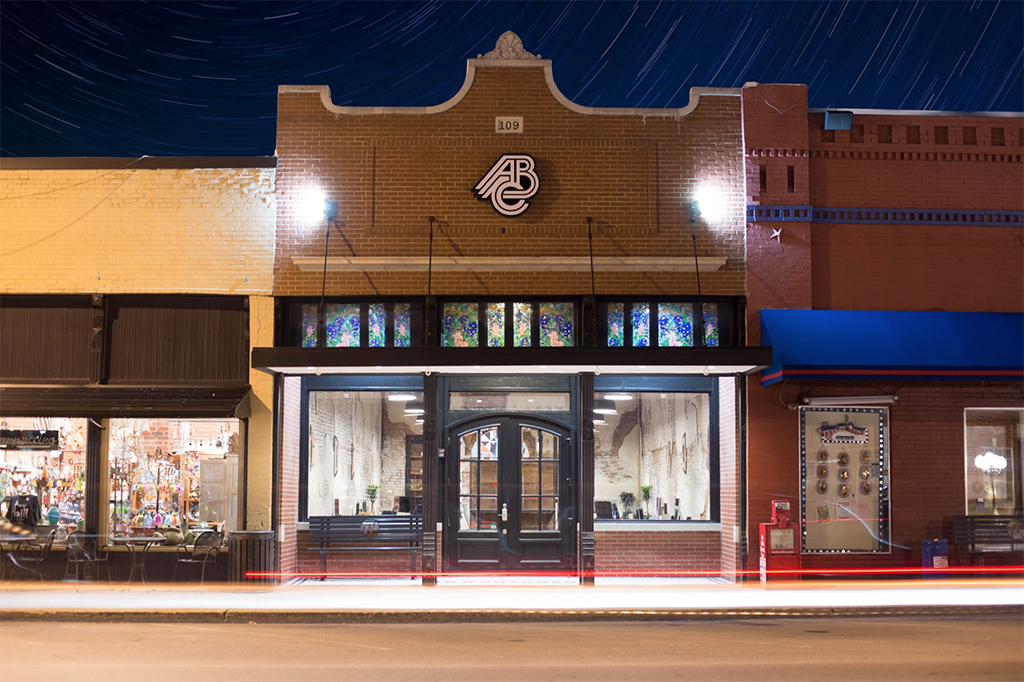
These guys crave that type of environment. As freelancers working by yourself, you can end up pulling your hair out wondering why things aren’t working. There are times we get things back from a freelancer that we will have to send back, but had they of been in the office with us, I could have just walked over and said, “Don’t worry about that, focus on this” and it wouldn’t have been an issue.
Investing in the future
MM: It’s obvious with a quick glance around this office that you don’t shy away from building your machines. Tell me about the tech behind ABC.
BD: Thomas King is our technical director, so he will build most of these computers for us. I lean on him for his tech expertise, so if he’s recommending I buy an Ultra I will. Or if he says stick to Titan XP’s, then I stick with it.
MM: This is something I’ve quickly caught onto with the 3D community. The demands of 3D and motion design is one of the few industries were computers can’t meet your needs. You have to build something on your own.
BD: This industry is so split right now. I was shocked at NAB when I saw how many people were still on Macs, or hacking their Macs. We switched to PCs two and a half years ago, and you can see a drastic change in our portfolio.
Yes, we have incredibly talented people, but we also have so much more power at our disposal now. When we switched to PCs, we got onto GPU rendering. Next thing you know, we’re essentially creating feature films that are 30-seconds long about watches. Stuff I didn’t even think was possible when we were on Macs.
We even get teased by the team at Lucasfilm saying we need to come work with them, it’s crazy.
We jumped into Octane, and now we primarily use Redshift. It’s been a whole new world. The GPUs are pretty cheap, so for the past two years we just put money back into computer equipment. If we get a project where I’m concerned we can’t render it, I’ll go order more GPUs.
I remember spending thousands on render farm costs, money I could have invested back into my own machines. While cloud rendering sound awesome, the reality is that it’s not free. You’re going to pay for it. When you upload your samples that has hardly any geo in it and it costs 25-cents a frame, that’s one thing. But when you have a big project, and it’s $2 a frame to render it, the cost adds up real fast. So we built a full server and GPU rack.
We have a client now, where we are making long-form spots. These are 60-second or 90-second commercials that we wouldn’t have been able to make if we weren’t investing back into our own tech. It’s still unbelievable that we can render something like this in house.
Every Monday we have a team meeting, and we’ll also do Monday inspiration. We’ll find stuff that we love, things to look at it, and we’ll break it down. It helps spark technical questions, and that helps us figure out ways we need to improve. You’ll also find out about plugins you didn’t know about, or even upgrades we can make to our tech.
Advice for Motion Designers
MM: I’d like to finish with some advice or tips that you can share with our readers. Can you first offer up any advice to aspiring motion designers?
BD: Focus on design first. If it doesn’t look good, it’s not going to start looking better because you make it move around. It has to look good first, and then animate second. Otherwise you’re just making ugly pictures move.
Even to this day, I don’t consider myself an advanced animator. I’m brute force. I keyframe, and if mograph effectors can do it, I can do it. That’s because I put all my effort into making it look right, and then the animation comes secondary. You can always throw a camera move on something, and have it turn out amazing.
I mean, look at the Westworld intro. There isn’t a ton of animation, but it’s just gorgeous with some cinematic camera moves.
MM: Any final things you’d like to share with readers trying to grow their business?
BD: Back when I was working from home by myself, Street League Skateboarding had just started on ESPN. They had put on Twitter that they were looking for interns. I knew I didn’t want to be an intern, but I knew they had to be checking emails since they just shared an email address. I emailed them and put together a proposal that essentially said,
“I can tell that Street League Skateboarding is being branded by non-skateboarders. I am a skateboarder and a professional motion designer that creates TV show graphics packages, so I need to start working with you. [laughs] I know the culture better, I understand professional television, and I can blend the two worlds to make it more legit.”
So I emailed the proposal off to them, and figured I should just start filling in a bunch of other email addresses to see if I could email Rob Dyrdek directly, the founder of Street League.
Less than 24 hours later, I got an email back that said, “Let’s do this.” That’s it.
I thought for sure, someone was messing with me. They knew I was trying to guess his email, and they’re messing around with me. Plus what does this even mean? I just proposed a year’s worth of work, and all I got back was “Let’s do this.”
Sure enough, the General Manager of Street League followed up with, “Congratulations. You have a better chance of winning the lottery than you do guessing Rob’s email account, let alone having him care about who you are, and caring about your work. Rob is super stoked by your proposal and asked me to reach out to you.”
Eight years later, we still work with Street League Skateboarding, as well as Fantasy Factory, Ridiculousness, and several other MTV shows. And it was a Street League Skateboarding connection that led to us landing Nixon watches.
MM: Sometimes you just have to take a risk.
BD: Exactly.
Special thanks to Barton Damer and the ABC crew for hosting us and for this interview. If you’d like to learn more about them, check the links below.
- Website: alreadybeenchewed.tv
- Instagram: @alreadybeenchewed | @bartondamer


